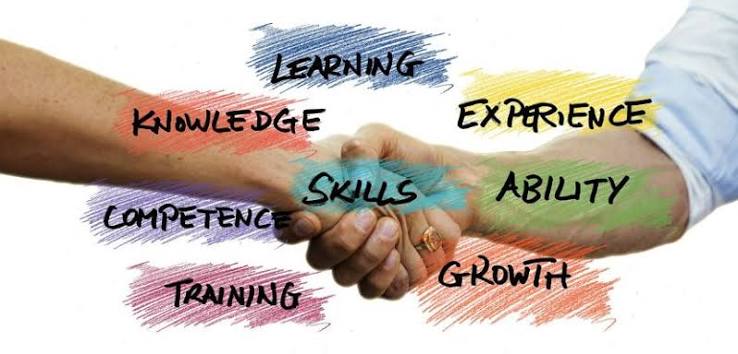
Skills-Based Hiring: Why the CV Is Becoming Obsolete
The CV is dead. Not literally. You’ll still see resumes for a while. But as a hiring tool, the CV is becoming obsolete.
Why? Because CVs tell you about someone’s past. They don’t tell you about their potential. They tell you what they’ve done before. They don’t tell you what they can do next.
And companies are tired of hiring based on past performance. They’re moving to skills-based hiring.
Skills-based hiring means screening for what people can do. Not where they’ve done it. Not how long they’ve been doing it. What they can actually do.
This is transforming how companies hire. And it’s changing who gets hired.
Here’s why the CV is becoming obsolete, and what to screen for instead.
Why the CV Is Becoming Obsolete
The traditional CV has three fundamental problems.
Problem 1: CVs Filter for Similarity, Not Capability
CVs are filtered through experience. “What companies have you worked for? What titles have you had? How long have you been doing this?”
This creates a very specific hiring profile: people who look like the people you’ve already hired.
You hire someone from Company A. That becomes the template. Now you’re looking for people from Company A or similar companies. You’re looking for people with the exact same title. You’re looking for people with X years of experience in Y role.
This creates homogeneous teams. It limits diversity. It filters out people who could do the job but haven’t done it in the exact way you’re looking for.
A person who’s never had the title “Product Manager” might be an excellent product manager. But the CV filters them out because they don’t have that title.
A person from a different industry might bring fresh perspective and capability. But the CV filters them out because they didn’t work at a “relevant” company.
CVs tell you about the past. They don’t tell you about capability. They tell you about similarity. And similarity bias is killing diversity.
Problem 2: CVs Create Recency and Credential Bias
CVs are read with bias. The person who graduated from the “right” school gets more attention. The person who worked at the “right” company gets more attention. The person who has more recent experience gets more attention.
These are all forms of bias, and they’re baked into how CVs are evaluated.
Recency bias: “You’ve been out of the workforce for two years. You’re not qualified.”
Actually: They might be incredibly qualified. They had a child. They took care of a family member. They traveled and learned. But the CV says “employment gap” and you filter them out.
Credential bias: “You didn’t go to a top-tier school.”
Actually: They might have learned more through their work and life experience than someone who went to Stanford. But the CV says the wrong school and you filter them out.
Similarity bias: “You don’t have exactly the right experience.”
Actually: They might have learned the exact skills you need in a different context. But the CV doesn’t show that, so you filter them out.
CVs amplify bias. They make it official. They make it feel like a rational decision.
Problem 3: CVs Are Gamed and Deceiving
CVs are optimized for getting past screening. People have learned to write CVs for the resume screener, not for the actual job.
They pad titles. They exaggerate accomplishments. They use keywords that match the job description. They make their role sound bigger than it was.
A resume screener can’t detect this. A person can’t even detect this reliably. It requires digging in.
And companies are tired of digging in. They’re moving to screening for actual capability.
The Problem With Credentials
Credentials have become the default filter for hiring. “Did you go to a top school? Did you work at a top company? Did you have the title we’re looking for?”
But credentials don’t predict performance. Multiple studies show that where you went to school and where you worked don’t predict how well you’ll perform on the job.
What predicts performance is capability. Can you actually do the job? Can you learn what you don’t know? Can you solve problems? Can you work with people?
Credentials are a proxy for capability. They’re not a bad proxy. They correlate. But they’re an imperfect proxy, and they exclude a lot of capable people.
Companies are realizing this. They’re moving from credential-based hiring to capability-based hiring.
What Is Skills-Based Hiring?
Skills-based hiring means screening for the specific skills required for the job. Not the credentials that might lead to those skills. The actual skills.
For example:
Traditional hiring for a data analyst: “Do you have a degree in statistics? Have you worked in a data analytics role for 3+ years?”
Skills-based hiring for a data analyst: “Can you write SQL queries? Can you create data visualizations? Can you explain what a normal distribution is? Can you spot patterns in data? Can you explain your findings to non-technical people?”
Traditional hiring for a product manager: “Have you been a PM at a top tech company?”
Skills-based hiring for a product manager: “Can you articulate a product vision? Can you translate customer needs into product requirements? Can you prioritize among competing demands? Can you work with engineering and design?”
Skills-based hiring asks: What can you actually do? What skills do you have? Can you do this job?
It doesn’t ask: Where did you learn it? How long have you been learning it? What companies validated you?
What to Screen For Instead of CV Credentials
If you’re moving to skills-based hiring, what do you screen for?
1. Core Skills for the Role
Identify the 5-7 core skills required for the role. Not nice-to-have skills. Core skills.
For a software engineer:
- Can they code in the required language?
- Can they design systems?
- Can they debug and solve problems?
- Can they work with other engineers?
For a sales person:
- Can they research and understand a customer’s business?
- Can they pitch a solution?
- Can they handle objections?
- Can they close a deal?
For a designer:
- Can they create beautiful interfaces?
- Can they think about user experience?
- Can they incorporate feedback?
- Can they work with engineering and product?
Write down the core skills. Be specific. Don’t say “attention to detail.” Say “can proofread written content and catch grammatical errors.” Don’t say “leadership.” Say “can delegate tasks and provide feedback.”
2. Demonstrated Capability, Not Just Credentials
How do you know if someone has a skill? They’ve demonstrated it.
This is where traditional interviews fail. They ask about skills. “Tell me about a time you handled a difficult customer.” The person tells a story. You think they have the skill.
Skills-based hiring asks the person to demonstrate the skill.
For a software engineer: Have them code. Give them a coding challenge. See if they can actually code.
For a sales person: Have them pitch. Give them a scenario. Have them pitch a product to you. See if they can actually pitch.
For a designer: Have them design. Give them a design challenge. See if they can actually design.
This is more work. But it’s worth it. You’re not guessing about capability. You’re seeing it.
3. Learning Ability, Not Just Expertise
Not everyone has every skill you need. But do they have the ability to learn?
Look for signals of learning ability:
- Can they explain how they learned a skill?
- Have they learned related skills?
- Can they adapt when the environment changes?
- Have they picked up new skills as their role evolved?
Learning ability often matters more than current expertise. Someone who’s learned three different programming languages can learn a fourth. Someone who’s solved three different types of problems can solve a new type.
4. Problem-Solving Approach, Not Just Solutions
How someone solves problems matters as much as whether they get the right answer.
In an interview, ask about their problem-solving approach:
- “Walk me through how you’d approach this problem.”
- “What information would you need to solve this?”
- “How would you validate your solution?”
- “What would you do if your first approach didn’t work?”
Listen to how they think. Do they ask clarifying questions? Do they break problems into pieces? Do they consider multiple approaches? Do they validate their ideas?
This tells you more about their capability than whether they got the right answer.
5. Collaboration and Communication Skills
Most jobs require working with other people. Can they do it?
Look for:
- Can they explain complex concepts simply?
- Can they listen and incorporate feedback?
- Can they work with people who have different approaches?
- Can they give feedback constructively?
- Can they work across functions (engineering, design, product, sales)?
Ask in interviews:
- “Tell me about a project where you worked with people from different backgrounds. How did you navigate differences?”
- “Tell me about a time someone gave you critical feedback. How did you respond?”
- “Describe your communication style. What do people say about how you communicate?”
6. Adaptability and Resilience
Things change. Markets shift. Requirements evolve. Technology evolves.
Can people adapt? Can they handle setback?
Look for:
- Have they worked in environments that required adaptation?
- Have they pivoted when their original approach didn’t work?
- Have they learned from failure?
- Do they see change as opportunity or threat?
Ask in interviews:
- “Tell me about a time something didn’t go according to plan. What happened and how did you respond?”
- “Describe a time you had to learn something new quickly. How did you approach it?”
- “What’s the biggest change you’ve experienced in your field? How did you adapt?”
7. Motivation and Drive for This Specific Role
Not just “are they motivated.” Are they motivated for THIS role?
This matters. Someone who’s driven by technical excellence might struggle in a sales role that rewards relationships. Someone who’s driven by relationships might struggle in an engineering role that rewards technical depth.
Look for alignment:
- Why are they interested in this role?
- What excites them about the work?
- Does their motivation align with what the role requires?
Ask in interviews:
- “What excites you about this role specifically?”
- “What does success look like to you in this role?”
- “What would make you leave this role in two years?”
The answer tells you if they’re genuinely motivated or just looking for any job.
How to Implement Skills-Based Hiring
If you’re moving from credential-based to skills-based hiring, here’s how.
Step 1: Define the Skills (Week 1)
List the 5-7 core skills required for each role. Be specific. Don’t say “leadership.” Say “can delegate tasks, provide feedback, and develop team members.”
Talk to people in the role. Ask: What skills do you use every day? What skills do high performers have that others don’t?
Document the skills.
Step 2: Design the Screening Process (Week 2)
For each skill, how will you assess it?
Some skills you assess through work samples. “Code a solution to this problem.”
Some skills you assess through scenarios. “You’re selling a new product. Pitch it to me.”
Some skills you assess through interviews. “Tell me about a time you handled a difficult stakeholder.”
Design the assessment for each skill.
Step 3: Remove Credential Filters (Week 2)
Stop filtering for degrees. Stop filtering for “years of experience.” Stop filtering for specific job titles.
If someone doesn’t have the exact credentials, do you still interview them? Yes. You’re screening for skills, not credentials.
This opens the funnel. You’ll interview more people. But more of those people will be actually capable.
Step 4: Run the Assessment Process (Week 3+)
For each candidate, run them through the skills assessment.
Don’t try to assess all skills in the first interview. Spread it across multiple interactions.
First interview: Assess core skills. Can they do the basic work?
Second interview: Assess depth. Can they do the work well?
Work sample or project: Assess capability under constraints. Can they produce real work?
Final interview: Assess fit and motivation. Do they want this job?
Step 5: Make the Decision Based on Skills, Not Credentials
Did they demonstrate the skills? Did they show learning ability? Can they do the job?
That’s the decision.
Not: “They didn’t go to Stanford.” That’s irrelevant.
Not: “They haven’t had the exact title before.” That’s irrelevant.
Did they demonstrate capability? That’s what matters.
The Benefits of Skills-Based Hiring
When companies move to skills-based hiring, what changes?
Benefit 1: Better Hires
You’re screening for actual capability, not credentials. So you hire more capable people.
A study by LinkedIn found that skill-based hiring improved performance by 18% on average. People hired for their skills outperformed people hired for their credentials.
Benefit 2: More Diverse Hires
You’re not filtering for “worked at a top company” or “went to the right school.” You’re screening for skills.
This opens the door for people from non-traditional backgrounds. People who learned skills through different paths. People whose resume doesn’t match the template but whose capability does.
Companies that move to skills-based hiring see significant diversity improvements. Not because they’re trying harder. Because they’re screening differently.
Benefit 3: Faster Skill Development
You’re hiring people for the skills they have. You’re assessing what they can learn. You’re looking at how they think and problem-solve.
This means you hire people who can grow. They learn faster. They adapt to new challenges. They develop into more valuable employees.
Benefit 4: Lower Turnover
You’re screening for motivation and fit, not just capability. You’re asking: Why do they want this role? Does their motivation align with what the role requires?
This means you hire people who are motivated for this specific role, not just any role. Retention improves.
Benefit 5: Reduced Bias
You’re not screening based on where they went to school or what company they worked for. You’re screening based on skills.
This reduces bias. It doesn’t eliminate it (bias is more complex than that). But it reduces the credential-based bias that’s baked into traditional hiring.
The TPC Approach: A Case Study
We worked with a Series B tech company. 80 people. Struggling with hiring.
They were hiring based on credentials. “We need someone who’s worked at a top tech company. We need someone who went to a top school.”
But they kept hiring people who looked good on paper but didn’t perform well on the job. And they were missing talented people who didn’t have the “right” credentials.
Their hiring was biased toward similarity. Most of their team looked the same, went to the same schools, worked at the same companies.
We helped them shift to skills-based hiring.
Month 1: Define Skills
We worked with hiring managers to define skills for each role.
Software Engineer role:
- Can code in Python and JavaScript
- Can design systems
- Can debug and solve problems
- Can communicate clearly with other engineers
- Can learn new frameworks and technologies
Product Manager role:
- Can understand customer needs
- Can articulate a product vision
- Can prioritize among competing demands
- Can work with engineering and design
- Can analyze data and make decisions
Sales role:
- Can research and understand a customer’s business
- Can pitch a solution
- Can handle objections
- Can close a deal
- Can build relationships
Month 2: Design Assessments
For each skill, we designed an assessment.
Software Engineers: Coding challenge (assess coding), system design interview (assess systems thinking), behavioral interviews (assess problem-solving and communication).
Product Managers: Case study (assess strategic thinking), product presentation (assess communication), behavioral interviews (assess collaboration).
Sales: Sales roleplay (assess pitching), customer research exercise (assess understanding customers), behavioral interviews (assess resilience).
Month 3: Implement
They started using skills-based screening for all new hires.
Key change: They removed credential filters from the initial application. No “must have 5+ years at a top tech company.” No “must have CS degree.”
Instead: Tell us about a project you built. Show us your code. Tell us how you think about problems.
Results After 12 Months
Hiring improved dramatically.
Diversity improved 40%. Women in engineering went from 12% to 20%. People from non-traditional backgrounds went from 5% to 18%.
Performance improved. New hires were rated as higher performers (3.8/5 vs 3.4/5 previously).
Retention improved. New hires were staying longer because they were motivated for the actual role, not just taking any job.
Time to hire decreased. By removing credential filters, they interviewed more people. But they made decisions faster because they had clear signals of capability.
The Numbers:
- Diversity in hiring: +40%
- New hire performance: +12% higher ratings
- New hire retention: +15% staying past 12 months
- Time to hire: -2 weeks
- Hiring manager satisfaction: significantly higher
All because they shifted from screening for credentials to screening for skills.
Common Objections to Skills-Based Hiring
“If we don’t require a degree, won’t we hire people who aren’t prepared?”
Maybe. But you’re screening for skills, not credentials. If they can’t code or design or sell, you’ll see that in the assessment. A degree doesn’t guarantee those skills.
“Skills-based hiring will take longer than credential-based hiring.”
Initially, maybe. But long-term, you hire better people who stay longer and perform better. That saves time.
“Some skills require formal training.”
Some do. And if you require formal training, screen for it. But don’t assume formal training is required when experiential learning might work.
“We need to be able to verify credentials for compliance.”
You can require credentials AND screen for skills. Skills-based hiring doesn’t mean ignoring certifications or degrees. It means not using them as a filter.
The Future of Hiring
Credentials aren’t going away. Companies will still ask for degrees. Certifications will still matter.
But the primary screen is shifting. From “do you have the credentials” to “can you do the job.”
This shift is already happening. LinkedIn found that 71% of hiring managers are now focused on skills, not just credentials.
Companies that make this shift first gain an advantage. They hire better people. They build more diverse teams. They develop their people faster.
Your competition is making this shift. If you’re not, you’re falling behind.
How to Start
Here’s how to start implementing skills-based hiring:
Month 1:
- Pick one role to start with
- Define the 5-7 core skills required
- Document what excellent looks like for each skill
Month 2:
- Design an assessment process for those skills
- Remove credential filters from the job description
- Start interviewing for skills instead of credentials
Month 3:
- Hire your first skills-based candidate
- Measure results
- Iterate and improve
Don’t try to change everything at once. Start with one role. See what happens. Then expand.
The Bottom Line
The CV is becoming obsolete because it tells you about the past, not the future. It filters for similarity, not capability. It amplifies bias, not insight.
Skills-based hiring is the future because it screens for what actually matters: Can you do the job? Can you learn? Can you solve problems?
Make the shift. Define skills. Screen for capability. Hire better people. Build more diverse teams. Develop your people faster.
The companies that make this shift will outcompete the companies that don’t.
Ready to Shift to Skills-Based Hiring?
If you’re tired of hiring based on credentials and you want to hire based on capability, TPC can help.
We help you define skills for each role. We design assessment processes. We train your team on how to screen for skills instead of credentials.
Because hiring should be based on what people can do, not where they’ve been.
Book a consultation with Talent Potential Consulting
Are you still hiring based on credentials? Or have you shifted to skills-based hiring? Tell me in the comments.