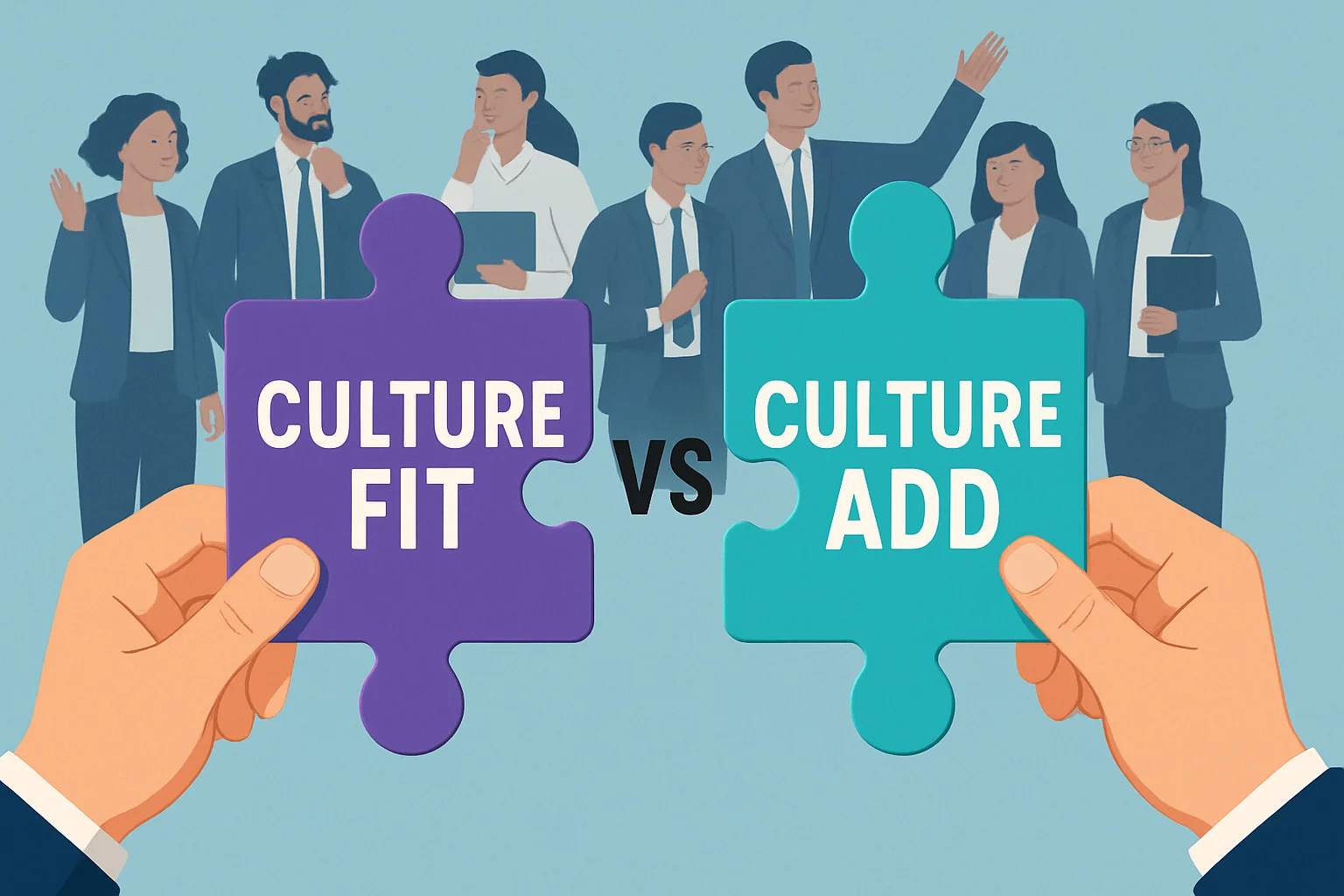
Culture Fit vs Culture Add: Which One Actually Builds Better Teams?
On World Safety and Health at Work Day, organizations are reminded to look beyond physical risks and compliance frameworks.
An equally critical dimension of workplace safety is often less visible.
It is psychological safety.
Employees perform at their best when they feel safe to speak, question, and contribute without hesitation. This makes hiring decisions more than just a talent strategy. It makes them a safety decision.
This raises an important question:
What kind of teams are we building through our hiring choices?
More specifically, does hiring for culture fit create stronger teams, or does culture add lead to better outcomes?
The Link Between Hiring and Psychological Safety
Hiring decisions shape how safe a workplace feels.
When organizations consistently hire individuals who think and behave in similar ways, they create alignment. However, they may also unintentionally create environments where difference feels uncomfortable.
This often results in:
- Limited diversity of thought
- Reduced willingness to challenge ideas
- A tendency to agree rather than question
- Lower psychological safety over time
In such environments, employees may choose silence over contribution, which directly impacts team effectiveness.
Understanding Culture Fit and Culture Add
To evaluate their impact, it is important to distinguish between the two approaches.
| Aspect | Culture Fit | Culture Add |
| Definition | Alignment with existing culture | Expansion of existing culture |
| Focus | Similarity | Diversity of perspective |
| Hiring Risk | Bias toward familiarity | Requires structured evaluation |
| Impact on Teams | Stability | Adaptability and growth |
| Impact on Safety | Can limit openness | Encourages expression |
Culture fit focuses on maintaining consistency. Culture add focuses on strengthening the organization through new perspectives.
Why Over-Reliance on Culture Fit Creates Risk
Culture fit is valuable when it ensures alignment with core values. The challenge arises when it becomes the dominant hiring lens.
This can lead to:
- Hiring based on comfort rather than capability
- Reinforcement of existing biases
- Lack of constructive disagreement
- Reduced innovation due to uniform thinking
Over time, employees may feel that fitting in is more important than contributing uniquely. This directly affects psychological safety.
How Culture Add Builds Stronger Teams
Culture add introduces new thinking while still aligning with organizational values. It allows teams to evolve rather than remain static.
Organizations that prioritize culture add often experience:
- Broader perspectives in decision-making
- Healthier debate and discussion
- Increased innovation
- Higher levels of employee participation
When employees see that different viewpoints are valued, they are more likely to contribute openly.
The Data Perspective
People analytics continues to reinforce the connection between employee experience and business outcomes.
Research shows that:
- Higher psychological safety improves employee engagement
- Engagement is closely linked to retention and productivity
- Diverse teams make more effective decisions
People data provides a comprehensive view of organizational health beyond financial performance
Organizations that leverage these insights are better positioned to build resilient teams.
Which Approach Builds Better Teams
The answer lies in balance.
- Culture fit ensures alignment with values
- Culture add ensures evolution and adaptability
However, organizations that rely heavily on culture fit risk creating teams that are aligned but not dynamic.
High-performing organizations intentionally incorporate culture add to remain competitive and future-ready.
What High-Performing Organizations Do Differently
Leading organizations take a structured approach to hiring and culture building:
1. Hire for values, not similarity
Values provide consistency. Similarity introduces bias.
2. Design interviews to test thinking
Ask candidates how they would challenge or improve existing processes.
3. Measure psychological safety
Go beyond engagement and assess whether employees feel safe to speak and contribute.
4. Develop leaders who can manage differences
Leadership capability is essential to translate diversity into performance.
The Shift from Comfort to Capability
Culture fit creates comfort and predictability. Culture add introduces challenge and growth.
Organizations that prioritize capability over comfort are better equipped to:
- Adapt to change
- Innovate effectively
- Build sustainable performance
Final Thought
If employees feel safe only when they agree, the organization is operating within limits.
If employees feel safe to question and contribute, the organization is building a culture that supports long-term success.
At Talent Potential Consulting, we believe that workplace safety extends beyond physical environments. Psychological safety is a critical driver of performance, engagement, and retention.
Our approach focuses on aligning talent with business goals while enabling organizations to evolve through diverse perspectives and data-driven strategies
Building better teams is not about hiring people who fit in. It is about bringing in individuals who strengthen and move the culture forward.
FAQs
1. Is culture fit completely outdated in modern hiring?
No, culture fit is not outdated. It is essential for ensuring alignment with core organizational values. The issue arises when it becomes the primary or only hiring criterion. A balanced approach that includes culture add leads to stronger outcomes.
2. How can organizations assess culture add during interviews?
Organizations can evaluate culture add by asking candidates how they think differently, how they approach problem-solving, and what changes they would bring to existing processes. Structured interview frameworks and diverse interview panels can also reduce bias.
3. How does culture improve psychological safety?
Culture adds diversity of thought. When employees see that different perspectives are valued and encouraged, they feel more comfortable sharing ideas, raising concerns, and participating actively. This directly strengthens psychological safety.